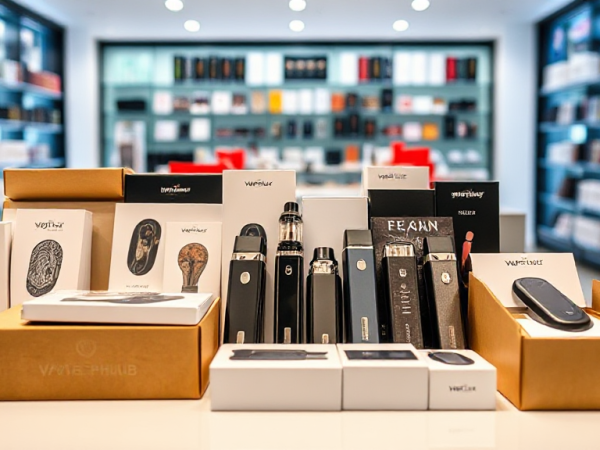
The Words on the Box: A Shopper’s Glossary for Disposable Vape Listings
You open a product page and read: 20,000 puffs, mesh coil, 2% nic salt, MTL draw, USB-C rechargeable. Four of those five terms may mean little to you. This glossary translates the vocabulary you meet on a disposable vape listing, one term family at a time, so the next product page reads like plain English. The examples here are drawn from the kind of catalogue you find at Justvapehub, where listings for models such as the IGET BAR PRO 10000 and KUZ PEARL 30000 use exactly this shorthand.
Puff Counts and Capacity: What the Big Numbers Promise
Almost every disposable listing leads with a large number: 3,500, 9,000, 20,000, 30,000. This is the puff count, the manufacturer’s estimate of how many draws the device will deliver before the e-liquid runs out. It is a laboratory-style estimate, not a guarantee, because a slow, deep draw uses more liquid than a quick one. Treat the number as a rough ranking tool rather than a precise budget.
Puffs versus millilitres
Some listings also show a millilitre figure, such as 2ml or 18ml. Millilitres describe the actual e-liquid volume inside the device; puff counts are derived from that volume under test conditions. When two devices show the same puff count but different millilitres, the smaller one is likely tuned for shorter draws.
Why the same brand shows several numbers
A brand may release a 3,500-puff model and a 10,000-puff model side by side. The higher number usually means a bigger battery and a larger liquid reservoir, which makes the device heavier and less pocketable. The trade-off is convenience against size.
Device Types and Form Factors: Bar, Pod, and Box
Listings use a handful of shape words to describe how a disposable is built. A bar is a slim, pen-like device designed to be held like a cigarette. A pod-style disposable is flatter and often has a mouthpiece shaped like a small whistle. A box-style disposable is wider and may include a screen or adjustable airflow.
What “disposable” actually means
Disposable means the device arrives prefilled and precharged, and is discarded when the liquid or battery is spent. You do not refill it or replace coils. Some models now include a USB-C port so you can recharge the battery before the liquid runs out, which stretches the usable life of a high-puff-count device.
Closed and open systems
A closed system is sealed at the factory; an open system lets you refill. Disposable vapes are closed systems by definition. If a listing mentions refillable pods or e-liquid bottles, you are looking at a different product category.
Nicotine Language: Strength, Salts, and Percentages
Nicotine strength on Australian listings is usually written as a percentage, such as 2% or 5%, or as milligrams per millilitre, such as 20mg. The two are related: 2% is roughly 20mg per millilitre. Nicotine salts (often shortened to nic salt) is a form of nicotine that is smoother on the throat than freebase nicotine at the same strength, which is why many disposables use it.
Reading the strength line
A 2% device delivers a moderate hit; a 5% device is stronger. The percentage refers to concentration, not total nicotine in the device. A high-puff-count device at 2% may contain more total nicotine than a small device at 5%, because it holds more liquid.
What “smooth throat hit” means
Throat hit is the sensation at the back of the throat when you inhale. Nic salts are usually described as smooth, while freebase nicotine is described as harsh. Listings use these phrases to tell you what the draw will feel like, not how strong the nicotine is.
Draw Styles: MTL, RDTL, and DTL
Draw style describes how you inhale. MTL (mouth-to-lung) means you pull vapour into your mouth first, then inhale, like smoking a cigarette. RDTL (restricted direct-to-lung) is a slightly looser pull that goes straight to the lungs. DTL (direct-to-lung) is a wide-open, high-airflow inhale typical of cloud-chasing devices.
Which draw suits a disposable
Most disposables are tuned for MTL or a loose MTL, because that mimics cigarette smoking and suits higher nicotine strengths. A listing that says “loose MTL” or “restricted DTL” is telling you the airflow is slightly more open than a tight cigarette-style draw.
Airflow and adjustable controls
Some box-style disposables include a small slider or dial to adjust airflow. If a listing mentions adjustable airflow, the draw style is not fixed; you can tighten or loosen it to taste.
Hardware Terms: Coils, Batteries, and Charging
The hardware line on a listing explains how the device turns liquid into vapour. A mesh coil is a heating element made of a perforated metal sheet rather than a wound wire; it heats more evenly and is often linked to fuller flavour. A cotton wick carries liquid to the coil.
Battery capacity and rechargeability
Battery capacity is usually given in milliamp-hours (mAh). A higher mAh number means more stored energy, which matters most on high-puff-count devices. A USB-C port means you can top up the battery, while a sealed device with no port is used until the battery dies.
What “auto-draw” means
Auto-draw means the device activates when you inhale, with no fire button. Almost all disposables are auto-draw. If a listing mentions a button, it is either a power switch or a lock, not a manual fire control.
Flavour and Ingredient Vocabulary: What You Are Actually Inhaling
Flavour names such as “blue razz” or “mango ice” are marketing labels, but the ingredient line tells you more. PG (propylene glycol) carries flavour and produces throat hit; VG (vegetable glycerine) produces vapour volume and a smoother feel. A 50/50 PG/VG ratio is common in disposables because it balances both.
Cooling agents and sweetness
Words like “ice”, “menthol”, or “cool” indicate added cooling compounds, usually WS-23 or menthol. “Sweet” or “candy” suggests added sweetener, which can clog coils faster in refillable devices but matters less in a sealed disposable.
Flavour families on a listing
Most catalogues group flavours into fruit, menthol or mint, dessert, and beverage. Knowing the family helps you predict whether the device will be sharp and cool or rich and sweet.
How to Read a Listing Without Getting Lost
Start with the puff count and nicotine strength, because those two numbers set the device’s place in the range. Next, check the draw style and airflow note to see whether the inhale matches what you already like. Then read the hardware line for coil type, battery capacity, and whether the device is rechargeable. Finally, scan the flavour family and ingredient ratio.
If you are comparing several models at once, a simple table helps. Below is a comparison of the term families covered in this glossary and what each one tells you.
| Term family | What it tells you | Where to look |
|---|---|---|
| Puff count | Rough lifespan and size class | Headline number |
| Nicotine strength | Concentration and smoothness | Percentage or mg line |
| Draw style | How the inhale feels | MTL, RDTL, DTL note |
| Hardware | Coil, battery, charging | Specifications list |
| Flavour and ratio | Taste profile and vapour feel | Flavour name and PG/VG |
Once you know these five families, a listing stops being a wall of numbers. You can scan a page of Just vapes in a couple of minutes and shortlist the devices that match your draw style and strength preference. Shoppers comparing Just vapes Australia catalogues will notice that the same vocabulary repeats across brands, so the glossary travels with you from one product page to the next.
The last habit worth building is to read the fine print on shipping and returns before you commit. A listing that explains Justvapeshub delivery terms and warranty conditions is giving you the full picture, not just the puff count. With the vocabulary above, you can judge a product page on its substance rather than its headline number.